
Recorded Deeds in Russell County
Every conveyance starts with a written instrument. The Russell County Register of Deeds accepts deeds that transfer land or affect title to it, and each recorded deed names the grantor and grantee, spells out the legal description, and states the form of conveyance. Related records explain the rest.
| Deed Type | What It Does | Common Use |
|---|---|---|
| Warranty deed | Conveys the described interest with title covenants | Ordinary sale transfer |
| Quitclaim deed | Conveys whatever interest the signer holds | Family or interest cleanup |
| Trustee or fiduciary deed | Transfers through stated authority | Trust or estate administration |
| Sheriff or tax deed | Records a transfer through a legal sale process | Foreclosure or delinquent tax proceeding |
| Mineral deed | Conveys a stated subsurface interest | Separate mineral ownership |
Not every recorded instrument is a deed. A mortgage or lien is an encumbrance instead. It burdens the land without conveying title. Russell County also records leases, plats, easements, affidavits, powers of attorney, and UCC fixture filings, so questions about access, debt, minerals, or signing authority often reach beyond the deed itself.
Russell Deeds Enter CIC
CIC eSearch lists Russell County as a selectable jurisdiction, and the portal presents login, registration, and subscriber controls at the entry screen. Access is gated from the start. Without credentials, expect to stop at that front page. The public entry screen displays the access condition for the county's deed records.
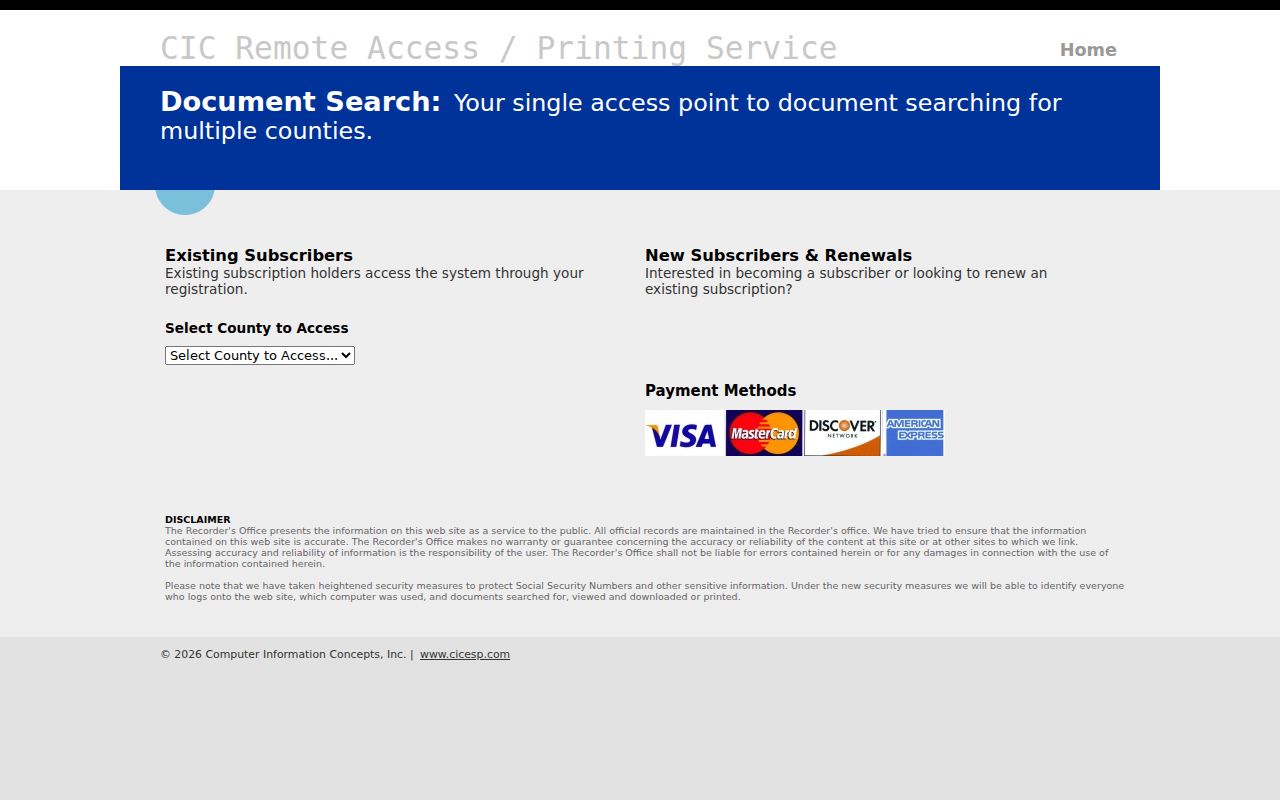
Dead ends happen online. The Register of Deeds counter still answers. When a portal stops at login, treat the office route as the working path rather than assuming the hosted search is a complete deed inventory.
Russell's 2006 Imaging Milestone
The county's imaging switch came in 2006. The Register of Deeds office page reports that every document presented for recording has been scanned. Each one has also been imaged since then. That marks a workflow change, not a searchable index date. It does not prove older deeds appear online or set a copy fee. The same page catalogs deeds, mortgages, liens, leases, plats, and military discharges. Powers, easements, affidavits, and fixture filings appear too. That range shows the office's reach.
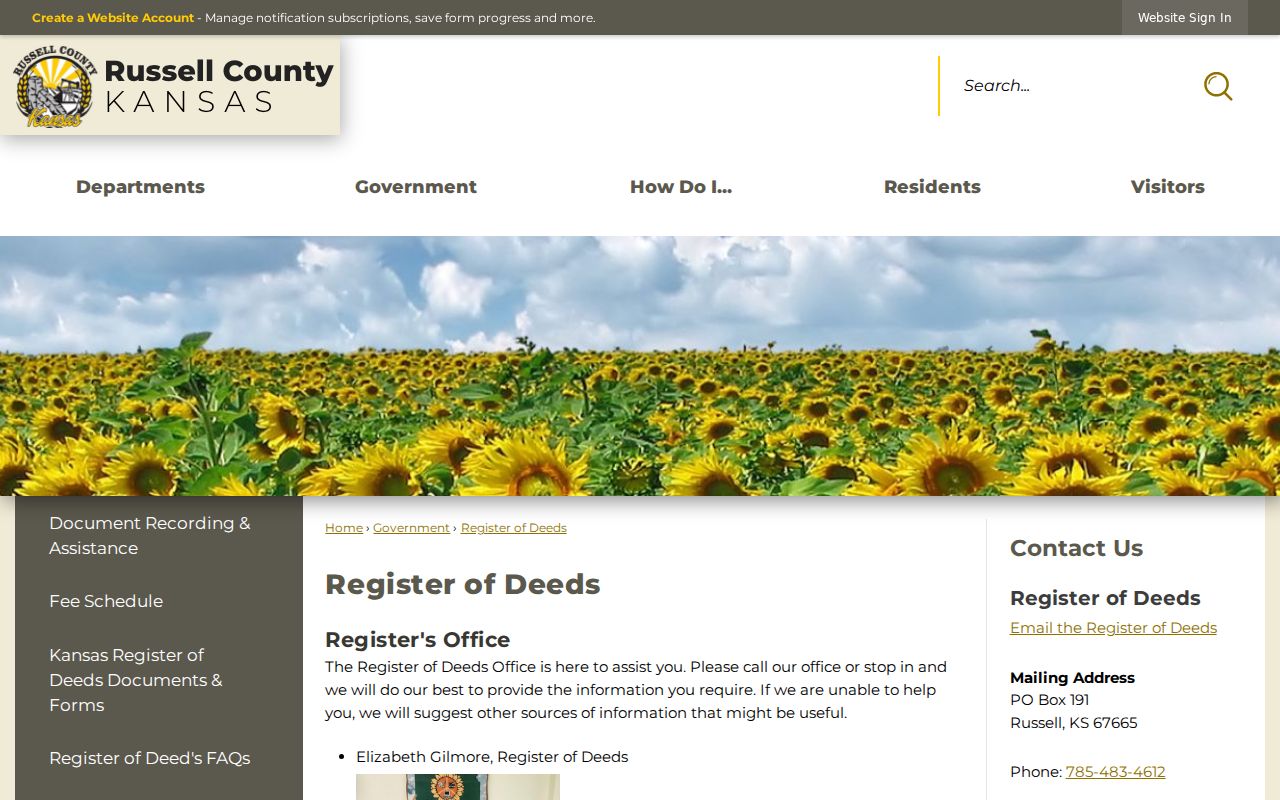
The office stands as the fallback. When a deed image cannot be reached through the hosted search, the Register of Deeds can produce the recorded document directly.
Walk Russell's Deed Chain
A grantor gives; a grantee receives. Start from the latest known grantee and carry the legal description alongside each name. Names alone can blur unrelated parties or properties.
- Use the county parcel card to capture the exact owner caption and legal description.
- Find the deed in which that owner appears as grantee.
- Read the grantor, recording date, deed type, and book/page or instrument reference.
- Search that grantor as an earlier grantee and repeat, verifying the same tract each time.
- Move to office indexes, deed books, plats, and archives when the online path ends.
- Grantor
- The party transferring the stated interest.
- Grantee
- The party receiving that interest.
- Chain of title
- The ordered sequence of recorded transfers for one tract.
- Book/page or instrument number
- The office reference used to retrieve a recorded document.
Match Russell Legal Descriptions
Every link in a Russell deed chain must describe the same land. Descriptions vary. A single Russell County parcel may read as several lots, two blocks, and VAC ST ADJ after a street vacation. Replats and vacated alleys can change how a tract reads. A GIS map line is orientation, never a legal survey. Compare the ordinance, the recorded replat, the deed, and the current parcel record. Do this before trusting any single description.
Russell SVQ Access Limits
Not everyone can pull an SVQ. The Register restricts Real Estate Sales Validation Questionnaires to authorized persons. Those forms can hold sale exposure, financing, distressed-sale facts, adjoining property, and personal or business property details. Hence their value to appraisers. An ATCi card, a recorded deed, and an SVQ are related but distinct records. Quote the source and its label rather than blending the three into one transaction fact.
Russell Deeds Before Online Images
Older deeds may live only in office index books. Archival context helps with those years. The Kansas Historical Society catalogs the 1901 Russell County Plat Book as LM 496 no. 4. Russell Public Library reports newspaper microfilm from 1874 through 2022. Papers can point toward probate, foreclosure, tax sale, and plat events, but the recorded instrument remains the source for the conveyance. Ask with a precise party, tract, book reference, and date range.
Request a Russell Deed Copy
Try the online image first, if the Russell record and your access level allow it. Otherwise visit or contact the Register of Deeds at the Russell County Courthouse, 401 N Main Street, Russell. Bring details. Party names, a parcel ID, the legal description, an approximate date, the deed type, and any known book/page or instrument number all speed the search. A plain copy just reproduces the record. A certified copy bears the custodian's certification. Formal filings often require the certified version. Confirm the current copy and certification fees and the accepted payment method before ordering, since the amount must come from the office. The Kansas Open Records Act offers another route. The office may charge actual costs and need not create a new record to answer a question.
Recorded, not guaranteed. Russell County deed records show instruments accepted for recording. They are not a title opinion and may not reveal an unrecorded interest.
Oil and Mineral Deed Clues
Russell County oil production began in 1923. The Treasurer portal still splits Oil, Gas, and Minerals from ordinary Real Estate. So a rural ownership question can reach beyond the surface estate. Mineral conveyances, leases, reservations, releases, easements, and fixture filings may all sit in the Russell County deed records. A tax statement proves nothing about subsurface rights. Trace the stated mineral interest through the recorded instruments instead. Confirm the description and fraction at each transfer.
Search surface and mineral names separately. One deed can convey the land yet reserve part of the minerals. A later lease may touch only that reserved interest. Releases and assignments can add further steps. The recorded wording controls; a tax category is merely a clue pointing to the next instrument.
All Russell Deed Access Routes
CIC is the remote entry point, but not the whole system. The courthouse counter offers the office index and copies during regular hours. A focused phone call can confirm whether a known instrument exists. Reference staff can also tell you what they need from you. Mail and KORA requests work when travel is impractical.
For older work, ask for the reverse and direct deed indexes by name. Request the deed books and plat books as well. The Kansas Historical Society archives hold a 1901 plat-book finding aid that adds historical context. Russell Public Library newspaper microfilm can pinpoint a date or event. That detail can sharpen the office search. Neither archive replaces a certified Register copy.
The county publishes no property-fraud recording alert enrollment page. Owners worried about an unexpected filing should ask the Register whether any notice service exists. Inspect the record itself. Steer clear of unofficial alert vendors. Avoid any that imply access to a county program without an official county link.