
Read Russell Property Tax Records
Reading Russell County property tax records means knowing which office holds what. The Appraiser determines and maintains valuation and classification data. The Treasurer issues statements, collects payments, tracks delinquency, and runs redemption and sale processes. The Clerk, meanwhile, works with the tax roll, levies, and special assessments. Hosted portals tie these pieces together for a property search. Each office remains the authority for its own records.
| Field | What It Shows | Where |
|---|---|---|
| Appraised value | Estimated property value under Kansas rules | Appraiser and ATCi parcel card |
| Assessed value | Taxable value after the class assessment rate | Appraiser roll |
| Tax unit and levies | District context used with assessed value | Clerk and tax roll |
| Statement status | Tax type, amount, installments, paid or due status | Treasurer CIC search |
| Delinquency and sale | Unpaid claim, redemption, foreclosure, and sale-cycle records | Treasurer, court, notices, and Register |
Appraised value and assessed value are different numbers. Neither one is a sale price. The tax bill grows out of assessed value plus the applicable levies, while a deed or sale record reflects a transaction under its own facts, so treat each figure as its own question.
Russell Tax Search Controls
The CIC tax statement search offers several entry paths. Pick the tax type before reading any result. Real Estate covers land and buildings, while Oil, Gas, Minerals, Personal Property, Trucks, and State Assessed Utilities sit in separate categories a parcel search might miss.
| Search control | Available clue | Practical use |
|---|---|---|
| Owner or taxpayer | Name plus Current Owner, Taxpayer, or Both | Find statements under a known caption |
| Address | Street number and street name | Known physical site |
| Legal land | Subdivision/block/lot or section/township/range | Town lot or rural tract |
| Identifiers | CAMA segments or tax identification pair | Exact cross-office match |
| Status | Only statements with current or delinquent taxes due | Isolate active balances |
The database carries an August 31, 2026 update stamp. No first year of online coverage is published, so older records may still require a call to the Treasurer.
Look Up a Russell Tax Bill
Begin with a parcel key pulled from ATCi, then search the Treasurer record. Keep the tax year and statement type noted. A taxpayer or mailing recipient is not always the deed owner, so confirm the owner of record before drawing conclusions.
- Find the parcel in ATCi and copy the PID, Quick Ref, owner caption, and legal description.
- Select the right CIC tax type and search by address, owner, or legal-land fields.
- Read the statement year, installments, payment status, and due-only filter state.
- Compare the value and classification against the Appraiser record.
- Contact the Treasurer when delinquency, redemption, protest, or sale status matters.
- Assessed value
- The portion of appraised value used in the tax calculation after the class rate.
- Mill levy
- The combined tax rate applied to assessed value.
- Exemption
- Relief authorized by law that changes taxable treatment; eligibility must be verified.
- Tax lien
- The county's legal claim arising from unpaid property tax.
Russell Tax Payment Calendar
County tax guidance says statements go out by November 1. The first half is due December 20. Paying in halves pushes the second half to May 10. Confirm the current statement before relying on those dates. Weekends, office processing, escrow, and payment method can all shift the practical deadline.
The same county guidance reports nine percent interest on delinquent real estate tax. It reports four percent on personal property. Check those rates against the current bill and the Treasurer's payment instructions before sending money.
Note: A mortgage escrow payment does not remove the owner's duty. Verify the Russell County statement was paid and credited.
Russell's 2026 Reinspection
The Russell County Appraiser inspects about 17 percent of real property each year. That pace reviews every parcel within six years. The 2026 reinspection starts in the City of Russell, where six years had passed since the last full inspection and a hailstorm recently damaged the area.
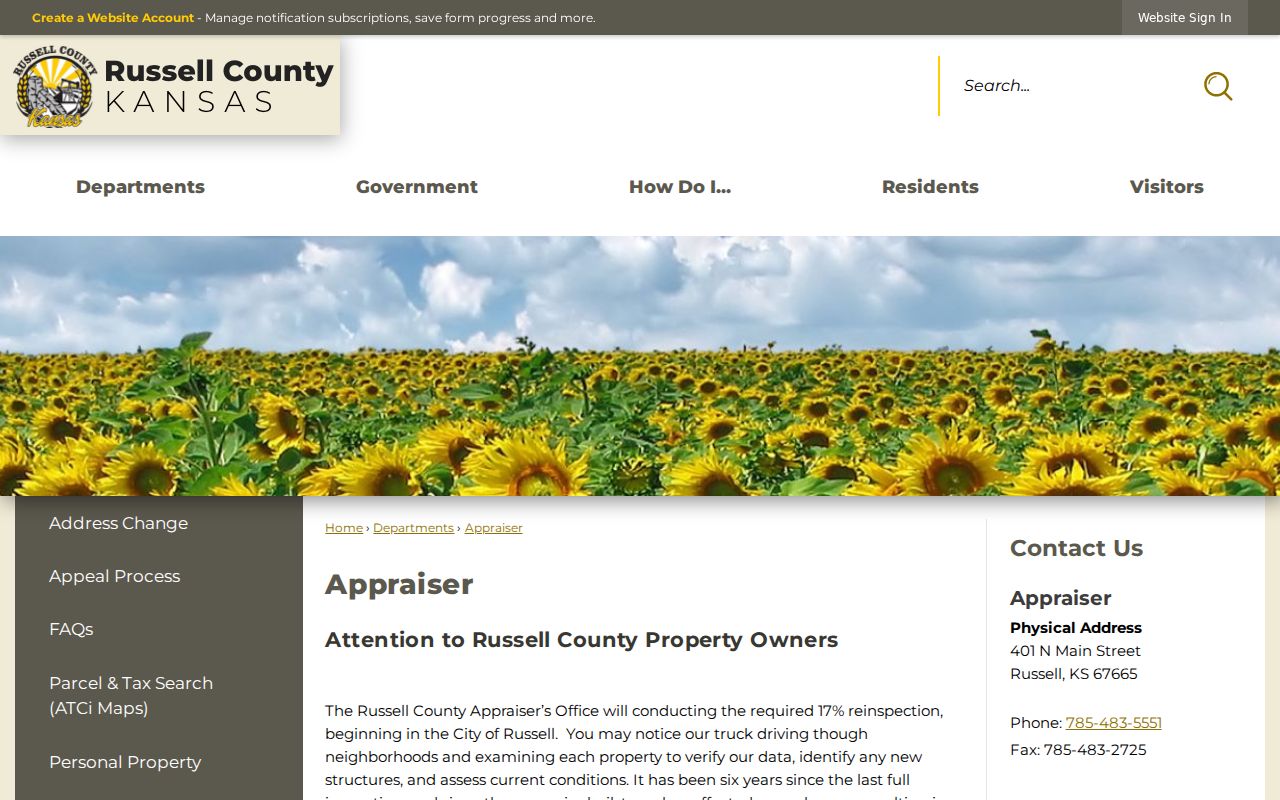
The market study calls residential property slightly upward to stabilizing. Commercial trends slightly upward, while vacant lots are stabilizing. A single parcel can still differ from those broad appraisal trends because of changes, corrections, and its own comparable sales.
Date Every Russell Tax Figure
Russell County tax figures come stamped with their own clocks. The ATCi courthouse card shows Tax Year 2026. It carries an AS OF date of March 15, 2026. The CIC tax portal carries a database update of August 31, 2026. These clocks belong to different systems. Never mash them into one vague claim that a property tax record is current.
One parcel can even show two appraised totals. ATCi displayed different totals for the same courthouse parcel on different views. Keep the exact source screen, field, tax year, and date written down. Ask the Appraiser which figure controls when a discrepancy affects an appeal or payment decision.
Russell Delinquency and Tax Sale
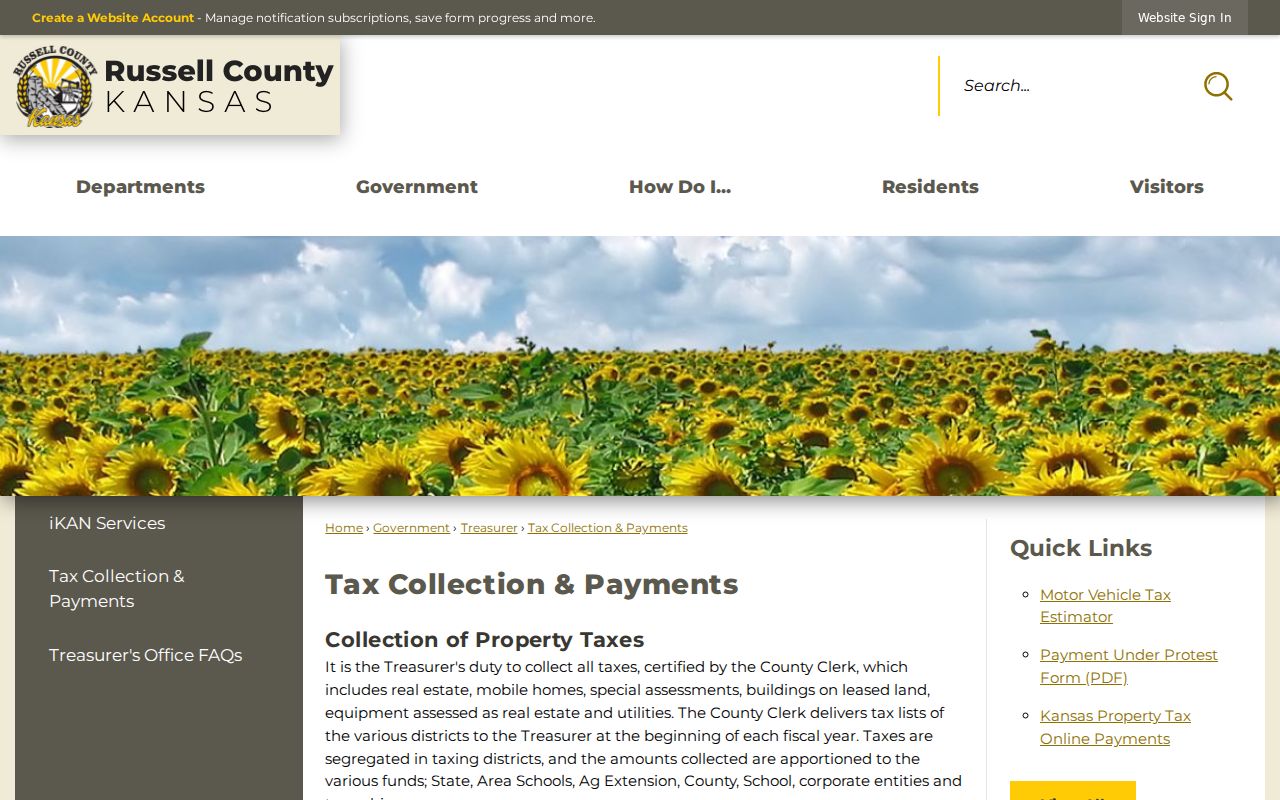
The county tax collection page explains protest, foreclosure, and sale procedure. The Treasurer separately handles liens, notices, redemption, and the tax sale itself, so delinquency questions usually touch both.
Resolution 2025-13 authorized action for parcels bid off September 6, 2022 and earlier that remained unredeemed as of September 3, 2025. It cites K.S.A. 79-2801 and 79-2401 sequences and distinguishes timing for homestead and non-homestead property. A resolution is a dated cycle snapshot, not proof of today's parcel status.
Appeal a Russell Assessment
Open the valuation notice the day it arrives. Kansas procedure offers an informal meeting after the notice, with further appeal paths behind that. The printed filing deadline controls, since it tracks the notice and the calendar. Strong evidence includes corrected parcel characteristics and photographs. Repair facts and comparable sales also help. A clear explanation of any field or date discrepancy strengthens the case.
Once the regular notice window closes, Kansas still permits a payment-under-protest path. That route has its own deadline and limits. Contact the Appraiser and review the Kansas Property Valuation Division appeal guidance before filing.
Appeal window. File by the deadline printed on the Russell County valuation notice. A late challenge may have to use a different statutory route.
Request Russell Tax Records Offline
Online portals cover only part of the ground in Russell County. For the rest, go straight to the office that holds what you need. The Appraiser handles valuation and classification. The Treasurer handles tax bills and collection. The County Clerk keeps the tax roll, levy, and special-assessment material. Bring the parcel number, legal description, tax year, owner of record, and the exact record you want.
Some records are not online. File a focused request under the Kansas Open Records Act. KORA lets an office charge actual costs. It generally requires a prompt initial response, often within three business days. It does not force an office to build a new compilation for you.
Call ahead for certified statements, redemption amounts, disputed payments, or tax-sale status. Those answers often hinge on a date-specific calculation. Mail requests should name the tax year and include contact information. For a visit, bring both the parcel key and the legal description. The Appraiser and Treasurer portals split identifiers differently.
Russell Agricultural Valuation
Kansas values agricultural land by use and productivity. It does not value it by what a neighboring parcel sold for. That distinction matters across rural Russell County. So the parcel class, acreage labels, soil or use inputs, and assessment record can tell a different story. A residential market comparison would not match it.
When those figures look inconsistent, ask the Appraiser about the valuation. Ask which acreage and use fields supported it. Never substitute a GIS map estimate for the assessment record itself. A landowner challenging a classification should gather current use facts, maps, and photographs. Any notice identifying a changed characteristic belongs in that file too.
Oil, gas, and minerals carry their own tax-search categories too. A mineral statement does not prove title to the surface or subsurface estate. When ownership of that interest matters, turn to the Register of Deeds. The office holds leases, reservations, transfers, and releases.